
Sports Massage for Runners

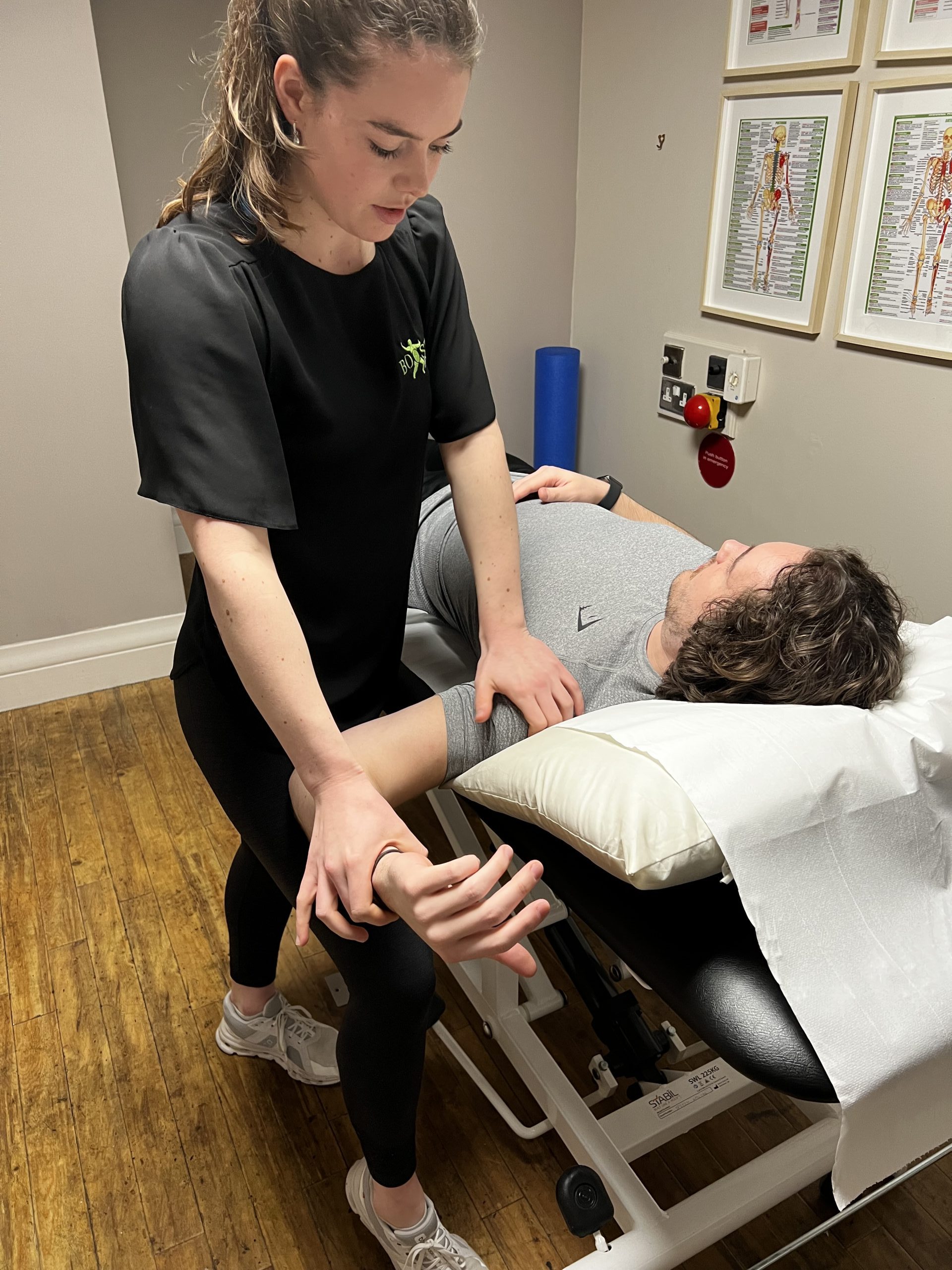
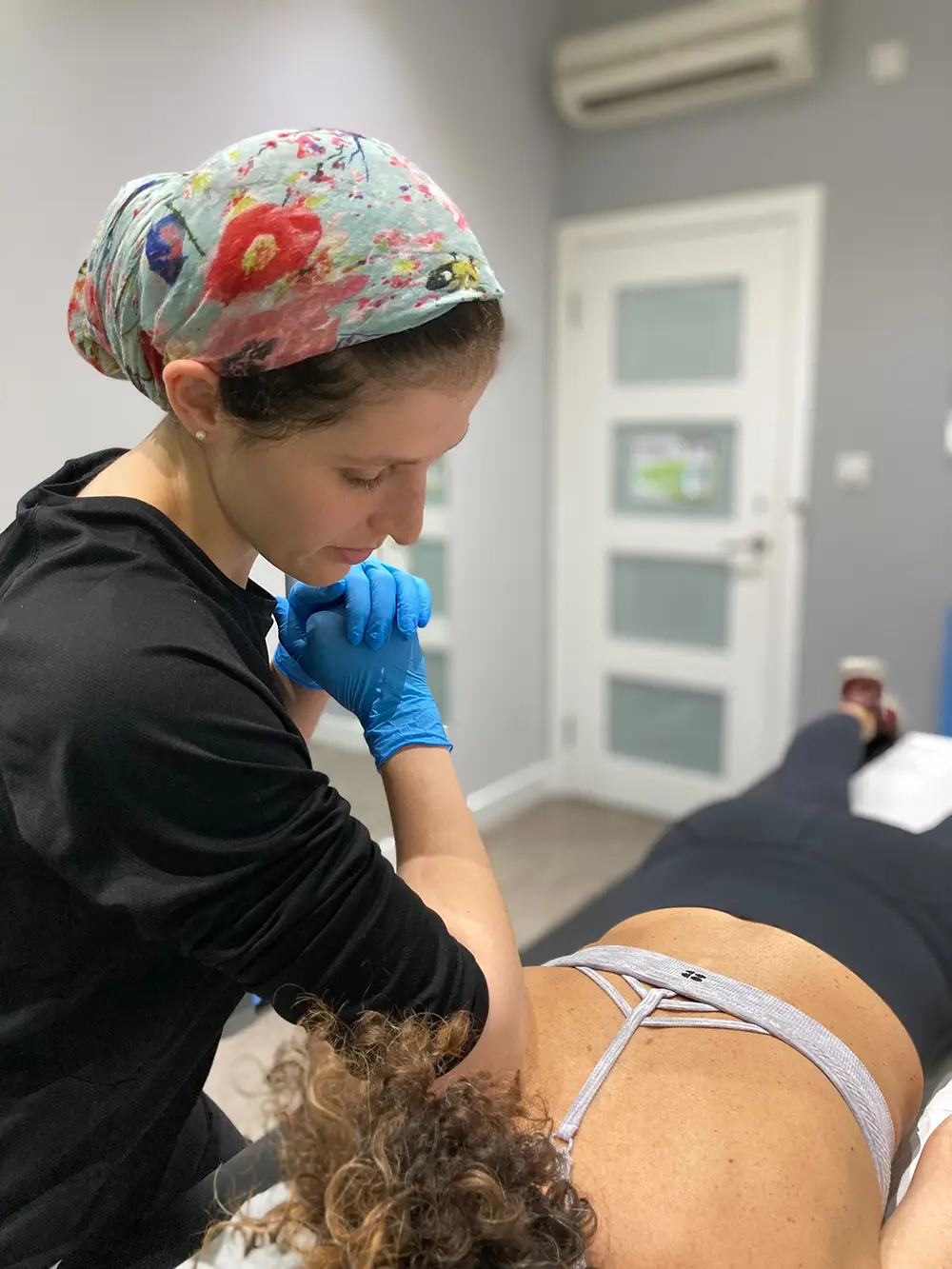
Helena Lundvik- Senior Massage Therapist at BOOST PHYSIO in Hendon, NW London, writes here about sports massage work that she does with runners of all levels- from fun runners to marathon runners.

Helena- BOOST PHYSIO Massage Therapist

I massage many athletes and runners at Boost Physio and I use a variety of techniques like Deep Tissue Massage and Soft Tissue Release (STR). STR is a specialised stretch where specific areas within a larger muscle are targeted. It is used to effectively release tension in areas of muscles that normal massage or general stretches aren’t able to reach, to break up adhesions and increase the flexibililty in the muscle tissue. This can in turn increase the range of movement and improve the quality of movement in joints.

I have used a combination of Deep Tissue and Swedish massage and STR with runners and athelets with excellent results. The treatment helps to prepare the patient for peak performance, to drain away fatigue, to reduce muscle tension and prevent injuries.

Massage is especially important for runners who run more than 35 miles per week. The more miles you run, the more strain your muscles are under and the more beneficial massage is. If you incorporate massage into your training schedule it will help you to train optimally.

By having a massage treatment immediatly before or after an event will also help reduce the muscle spasms that occurs with vigorous exercise.

Helena our Massage Therapist at BOOST PHYSIO, Hendon, NW4

BOOST PHYSIO are running a Massage Special offer- have 2 one hour massage sessions with Helen between 13/1/11 and 28/2/11 for only £85 (normal price would be £100 for 2x 1hr massage). Simply call us on 020 8201 7788 to book the 2 massages and pay £85! 

Hypermobility Syndrome- does it affect you?

Hypermobility is when all or some of your joints move more than the usual normal range of motion. Usually this doesn’t cause any problems, but if you do have pain in your hypermobile joints- then you may suffer from Hypermobility Syndrome.

Did you know that hypermobility diminishes with age, is 3 times more likely to affect women than men and has higher prevalence in Asian and African ethnicities compared to that of Caucasian ethnicity.

How do you know if you are hypermobile or have hypermobilty syndrome?

  • Do your joints click a lot?
  • Do you constantly seem to injure yourself easily (like spraining your ankle or repetitive strain injuries)?
  • Do you find your body is more flexible than others (or used to be when you were a child)?
  • Can you place your hands flat on the floor without bending your knees or do the splits (or could you when you were younger)?
  • Do you consider yourself double jointed?
  • Is your skin stretchy/ take a long time to heal?
  • Do you have joint pain?
  • Are you resistant to anaesthetics (like when you go to the dentist)?

If you answered yes to 3/5 of these and you are suffering with longstanding pain, come and discuss this with us. 

Jolene Sher- Snr Physiotherapist with an interest in Hypermobility Syndrome

Senior BOOST Physiotherapist Jolene Sher has an interest in dealing with cases of Hypermobility.

Being hypermobile is not a problem. Only if it affects your quality of life or brings you excessive pain that intervention may be necessary.

 What do you do if you are hypermobile or have hypermobility syndrome?

The best treatment is through appropriate LIFESTYLE CHANGES  and strengthening exercises to improve the muscles that support your joints.

This can be best achieved with appropriate assessment and treatment with your physiotherapist.

Examples of what you and your physiotherapist can work on is:

  • Posture and correct positioning (e.g. at work)
  • Incorporating gentle suitable exercise into your daily life
  • Core stability and balance training
  • Appropriate management of acute painful flare ups (with the doctor’s or physiotherapist’s help)
  • Referral to a doctor for medication (if necessary).
  • Self help: knowing your limitations (‘do’s and don’ts’). Learning to listen to your body.


REFERENCES:

  1. Joint Hypermobilty. Hakim A, Grahame R; Best Practice and Research Clinical Rheumatology Vol 17, No 6 pp 989-1004, 2003

 Hypermobility and the hypermobility syndrome. Simmonds JV, Keer RJ; Manual Therapy 12 pp 298–309, 2007

Scoliosis- curvature of the spine

Did you know that in Japan, by law, every school child must be screened for scoliosis?  This article describes what scoliosis is, how it is detected and what physiotherapy can do for scoliosis.

Scoliosis is defined as a sideways bend of the spine of greater than 10 degrees accompanied by a rotation of the vertebra.  Luckily of the estimated 2-4% of the population who have scoliosis only a small number require anything more invasive than physiotherapy.  The most common type of scoliosis is idiopathic (which means of unknown cause) and accounts for 80% of cases of scoliosis.  The remaining 20% are either congenital or neuromuscular in origin.   

What exactly is the problem with having a curvature of the spine? In certain cases back pain, limb pain or abdominal pain can develop as a result of the scoliosis.  In more severe cases lung capacity can be affected by the twisting of the rib cage.  But for many patients the main problem from scoliosis is cosmetic.

Physiotherapists have a key role in screening for scoliosis- in fact we regularly identify people with scoliosis- often this isn’t even the reason why the patient is coming for physiotherapy!  When conducting our examination we always thoroughly examine our patient’s posture looking for tell tale signs of scoliosis.  It is worth periodically checking children from age 8-14 for any tell tale signs of scoliosis.  If you have any concerns about a child’s posture they should be screened by a physiotherapist or doctor.

What to look for:

  • One shoulder higher than the other
  • One hip higher than the other
  • A hump on one side of the ribs when bending forwards
  • Particularly prominent shoulder blade/s

Physiotherapy treatment for mild cases of scoliosis involves postural education and intensive stretching and strengthening exercises. 

Specialising in physiotherapy for Scoliosis

Senior Physiotherapist Laura Harman at BOOST PHYSIO

Senior BOOST PHYSIO Laura Harman has spent time working at a specialist treatment centre for scoliosis and is a member of SOSORT- Society on Scoliosis Orthopaedic and Rehabilitation Treatment.

Consultant Q&A with Mr Fares Haddad- leading knee and hip surgeon

Mr Fares Haddad- leading knee and hip surgeon

Considering having hip or knee surgery?  Make sure you read my interview with top London knee and hip surgeon Mr Fares Haddad.  During Consultant Q&A I ask Fares questions that are on my patients’ minds about his field of hip and knee surgery. If you want to know about latest advances, “lubricating” injections for the knee and more, then please read on.

At BOOST PHYSIO we’ve enjoyed rehabilitating many of Fares’ patients over the years following hip and knee operations and I’ve also had the benefit of watching Fares perform various knee operations-hence we highly recommend him to our patients. If you want to read Fares’ impressive biography and CV follow this link to his website, but in brief Fares Haddad is a Hip and Knee Reconstructive Surgeon at University College Hospitals, The Princess Grace Hospital and the Wellington Hospital.  He is Divisional Clinical Director of Surgical Specialties at UCH, and Director of the Institute of Sport, Exercise and Health at University College London.  Clearly an expert in his field!

Q: Fares, you are well known for being one of a few surgeons to perform key hole surgery for hip problems. Which patients do you find benefit the most from this procedure?
A: 
Hip arthroscopy is a procedure that has expanded dramatically over the last ten years. The indications have become much clearer. The most successful interventions are in cases where there are isolated labral tears or when patients present in the early phases of femorocetabular impingement (FAI) before the joint is irrevocably damaged. FAI is a condition where the bones of the hip joint develop in such a way that the patient can function relatively normally, and often very athletically, but where abnormal contact between the femur and pelvis damages the hip. These are typically in sporting individuals who either suffer an acute injury, the labral tear, or get the insidious onset of symptoms through activity such as running, cycling or football. Plain x-ray imaging and MRI scan gives us most of the information we need although CT scanning is occasionally necessary to look at the bony anatomy. By dealing with the primary bony impingement as well as the problems within joint we decrease symptoms and hopefully also prevent recurrence and further progression of the problem in future. 

Q:  What does the future hold for technological developments in treatments for arthritic hip and knee joints?
A: 
The management of early arthritis of the hip and knee is progressing at an impressive rate. Technical developments will focus in the first instance on prevention thus by replacing the damaged menisci and the damaged joint surface and injured ligaments. The new work on partial resurfacing of joints with novel materials such as Oxinium is very exciting. New work also on customising joint replacement will change the face of the management of arthritis giving us joint replacements that are much more functional and geared to high end activity such as sports. 
 
Q:  Which sports do you believe are suitable for patients following total hip replacement surgery?
A: 
Following a hip replacement operation, we encourage our patients to get back to normal day to day activity within 6 weeks. All non impact sports such as long distance walking, gym exercises, swimming, doubles tennis and golf are encouraged. It is perfectly feasible for patients to play singles tennis or indeed in certain circumstances squash and many of our patients do get back to running but it is important for the patients to realise that there is a tension between the amount of impact activity that they do and the wear that they will cause to their new joint. 

Q:  How effective do you find “lubricating” injections are for arthritic knees?

A:  Our experience of the Hyaluronic acid lubricating injections for knee and hip arthritis has been mixed. There are some patients who have an extremely good response that lasts up to six months. There are others who do not respond at all. It is very difficult to predict. My personal experience is that those patients have dry knees without effusions tend to respond better to Hyaluronic acid therapy whereas those with effusions can respond to aspiration and injection but do so for a shorter period of time.  These are nevertheless interesting therapies which we must continue to pursue both in our athletic population when we often use them after surgery and also in the arthritic population.

I hope that you have found this Consultant Q&A interesting, if you wish to discuss any issues regarding your hip or knee condition with myself or one of my physios, please do not hesitate to contact us, you can call the clinic in Hendon, NW London on 020 82017788 or email us at info@boostphysio.com 

The BOOST Blogger- Steven Berkman

Regards… The Boost Blogger, Steven Berkman

Surfing Injuries, in London?

Having just returned from a wonderful family holiday in Cornwall, surfing capital of the UK, I can honestly say that we’ve never treated a surfing injury at BOOST PHYSIO.  There are 2 possible reasons why this could be- either very few surfers injure themselves, or could it be that surfing isn’t big in North West London?  

At least it's only his board that's broken!

I guess most people who contemplate surfing are more concerned about getting chomped by a shark and not too concerned about a sprained ankle or dislocated shoulder, but a little research into the injury incidence of surfing is quite revealing.  A study of all surfing and body-boarding injuries from the emergency department of the Royal Cornwall Hospital showed that males injured themselves 4 times more than females (click here to read the article). 

Is this because us men are more reckless and stupid when surfing that we are more likely to try surf a bigger wave than our female counterparts?  This ratio of 4 male patients to every 1 female patient with a surfing injury is very similar to our statistics at BOOST PHYSIO, across all sports (running, football, netball etc).  I think to generalise this is because more men are exercising for recreation and for fitness than women and hence we see more men with sports injuries.  Secondly I think the psychology of the sportsman leads him to push his boundaries to the excess, the male is more likely to try and run faster, jump higher and in so doing is more likely to injure himself.

What surprised me in this study was the average age of those with surfing injuries was 27 years old- I was picturing  Silver Surfers (no not over 60’s who are internet savvy, but those carrying surf-boards) limping in to the hospital! While it may be true that there are more youger people surfing and hence more injuries to younger people, I think it is also down to the experience of the older surfer that make them more aware of their limitations and less likely to push themselves into hazardous situations.  It is likely that older surfers haven’t recently taken up the sport, but have been participating for many years and are thus more knowledgable about the dangers of the sport and more conditioned to the sport- I have termed this “Berkman’s law of sensible older people who exercise and don’t get injured as often”.

Surf's Up

The same holds true for most other sports injuries that we see, the club tennis players in their 50’s and 60’s tend to play within their capabilities and do not push themselves excessively (but there are exceptions- David you know I am referring to you!!!).  As with all things in life there are exceptions and I believe that football is the exception.  We treat many footballers over 45 who present with injury at BOOST PHYSIO.  This does not conform with Berkman’s Law of sensible older people who exercise and don’t get injured as often.  I believe that the psychology of men who play football beyond the age of 40 is such that they are trying to run faster and kick harder than they could when they were 20 and thus more likely to do themselves a nasty injury.  The over 40 footballer is less likely to accept his limitations.

To summarise : if you are a female, not 27 years old and living in NW London you are less likely to suffer a surfing related sports injury- grab a board and dive in- Surf’s Up!

Oh and if you do surf and injure yourself- BOOST PHYSIO in Hendon specialises in treating NW London surfers!

by: Steven Berkman the BOOST BLOGGER  www.boostphysio.com

Cryocuff cold compression therapy

The Cryocuff is a fantastic bit of physiotherapy equipment we’ve invested in at BOOST PHYSIO. Cryocuff is a cold-compression therapy system that is ideal for treating knee, ankle and foot swelling and pain.

We tend to use it most often post-operatively. For example following total knee replacement, ACL reconstruction surgery, key hole surgery to the knee and post-meniscectomy. For ankle injuries we use Cryocuff to bring down swelling after torn ligaments, fractures and surgery (eg following bunion surgery, achilles tendon repair surgery etc).

What exactly is the Cryocuff system? There are various garments used for the different body parts- ie ankle, knee etc. These are applied by your physiotherapist to the affected area and the the garment is filled with iced water! As the garment fills with the iced water it begins to compress the affected area.

You should be familiar with the acronym RICE which is used in physiotherapy treatment and injury management: Rest, Ice, Compression, Elevation. Cryocuff treatment forms a crucial part of the ice and compression of the RICE regime.

Boost Physio in Hendon will apply and use this treatment when appropriate.

Ugg foot patient

I found out today that one of the people we are rehabilitating following her ankle and foot surgery diagnosed her problem from reading my article on UGG foot in our newsletter.

If you don’t know what UGG foot is, I’ll fill you in quickly. Ugg type boots may look very comfy and cosy and good for you, but they don’t support your feet. If you have dropped arches, pronate (that’s when your foot rolls inwards while walking) or very flat footed- wearing ugg type boots for long periods can be very painful and harmful for your feet and ankles. As our patient discovered…

She lives in her Uggs and in flat flip flop sandals. As her foot and ankle pain developed she thought she ought to wear her Uggs more, because she thought they were so good for you. Wrong- they were a big part of her problem.

She finally saw my article after months of trouble- diagnosed herself- but it was too late. She has had to have an operation to repair the tibialis posterior tendon in her foot and ankle because it had been over stretched and torn. A problem that would have been prevented if she’d been wearing better shoes instead of her Uggs and flip flops all the time.

Following excellent surgery and physiotherapy at BOOST PHYSIO she is on her road to recovery.

Do you KNEEd help?

England football captain Rio Ferdinand may have missed the whole Fifa 2010 Football World Cup because of his knee injury, but you don’t have to be an international footballer to have trouble with your knees.  In this blog I take a look at the range of knee problems affecting different age groups.

Osteoarthritis (“wear and tear”) of the knee affects 1/3 of people aged 63 and over, often causing knee pain, difficulty rising from a chair and climbing stairs.  But knee pain is also not unique to older people- in fact there are many knee problems that are common in adolescents and teenagers, not to mention the knee problems that beset the athlete and sportsperson.  Knee problems are one of the most common conditions that we treat at BOOST PHYSIO, let’s take a look at the type of knee problems that affect different age groups and how we treat them.

Active adolescent children (aged 10-14) complaining of knee pain at the front of the knee below the knee cap are often affected by Osgood Schlatters Disease.  X-rays will confirm the diagnosis for this condition, but are often not

Diagram of Osgood Schlatters Disease

needed as the clinical examination can be enough to make the diagnosis.   There will usually be a tender, enlarged area at the tibial tuberosity (this is the bump between the knee cap and the top of the shin bone), where the quadriceps muscle tendon attaches to the shin bone and pulls on the not yet fused tibial tuberosity.  The ratio of boys to girls affected by this condition is 7:1.  A Finnish study showed a frequency of 13% of adolescent athletes had Osgood Schlatters. 

At BOOST PHYSIO our treatment programme for Osgood Schlatters involves decreasing of physical activity to allow the inflammatory reaction to subside, a programme of stretches to the knee muscles to assist in the muscle length and ensure that range of movement of the knee is maintained.  Most importantly carefully guiding the adolescent back to sport with a graded programme.

Teenagers with knee pain are often affected by anterior knee pain.  Anterior knee pain is often also called Chondromalacia Patella or Pattela femoral pain syndrome.  Anterior knee pain by contrast to Osgood Schlatters is much more common amongst girls than boys.  This prevalence amongst girls is partly due to the wider female pelvis which leads to an increased likelihood of knock knees (technically called genu valgus).  Pain is usually at the front of the knee underneath the kneecap (patella) and is worse climbing stairs.  Anterior knee pain is caused by poor alignment of the patella largely due the mechanics of the patient’s knees (often knock kneed and flat footed) which leads to maltracking of the patella causing excessive pressure under the patella.  In severe cases this will roughen the cartilage surfaces under the knee cap. 

Example of severe maltracking of the patella

We treat anterior knee pain by always tackling the root of the problem first which is normally the biomechanics of the legs.  BOOST PHYSIO often recommends orthotics (inner-soles) to correct foot and knee position and always gives corrective exercises to deal with muscle-imbalances at the knees focussing on strengthening the vastus medialis portion of the quadriceps thigh muscle which helps to re-align the patella. We often also use special strapping techniques to off-load the patella and re-educate the muscles around the patella.  Often “hands on” work is also needed to loosen tight structures around the patella. 

Knee problems in people in their 20s-50s are often related to an injury or trauma and are often sports related. Whether it is the Sunday footballer with a torn meniscus (cartilage of the knee) or a runner with a tendonitis problem we assess all these patients very carefully with specific tests to accurately identify the nature of the injury.   These knee problems can be challenging to deal with as tissue healing is slower in people over 20 and indeed sometimes the damaged tissue cannot repair itself at all.  While the majority of our patients with sports injuries to the knee are treated successfully with physiotherapy a small number need the help of a knee surgeon and we make sure that our patients receive the appropriate advice and care in this regard.  For those who do require surgery we work very hard on their rehab programme aiming to regain full strength and flexibility as soon as possible.

Over 60s suffering with knee pain can often be due to osteoarthritis of the knee which can also cause stiffness and often swelling of the knee.  While surgery can be a very effective solution for many of these patients, most will respond very well to a programme of physiotherapy focusing on strengthening the leg muscles to off-load the knee joint and work to improve the flexibility of the knee.  Both these elements lead to decreases in pain levels and improvements in functional ability.

If you would like to discuss your knee problem and have a thorough physiotherapy assessment and examination please do call us on 020 82017788 to arrange an appointment or visit our website www.boostphysio.com for more information.

Freestyle Footballer, Ethan Altman, following his injury treatment

Freestyle footballer, Ethan Altman, sent us this thank you video, after having treatment at BOOST PHYSIO he was able to return to this exciting sport of Freestyle Football.  Have a look at him in action- he is amazing!!

This is what Ethan had to say: ” I’m Ethan Altmann, I had about 5 sessions with Jolene to help me through an injury. I am now fully healed!

I was given a lot of stretches and strengthening exercised to do and taught how to do them, I was told to rest for at least two weeks. I did the exercises and I rested, and I am really really happy I made a full recovery so quickly to return to my training!”

Jolene Sher, Senior Physiotherapist @ BOOST PHYSIO

This is a link to Ethan’s Youtube channel www.youtube.com/EraOfFreestyle

This is a link to Ethan’s “crew” homepage:  www.thefootballfreestylers.com

David Beckham’s Achilles injury- 6months at least

Everyone is asking me “how long will David Beckham be out for”- a long time I keep telling them!  It sounds like he has a ruptured achilles tendon, this is very easy to diagnose with 1 very simple test (the need for MRI’s and advanced scans etc is a nice bonus, but mainly useful if you suspect a partial tear only).

The achilles tendon is the very strong and tough sinew that attaches that big calf muscle (gastrocnemius and soleus) to the calcaneus (heel bone).  Ruptures (where the tendon snaps completely) of the achilles tendon are a common injury in over 35 year olds, making David Beckham a prime candidate for a rupture.  It is a common injury it football, but also in tennis, squash and basketball due to the explosive push-off (and also in fathers and sons races at school sports day as a good friend of mine will testify).

So what is the treatment- well it aint gonna grow back by itself- so surgery it is.  I’ve personally diagnosed and sent for surgery 4 cases of ruptured achilles tendon that have been missed by GPs.  The surgery stitches the tendon together and then usually involves immobilising the leg from the below the knee down to the toes for 6 weeks.  Then is the slow process of physiotherapy to recover the movement and strength.  Like I said 6 months out of sport at least. 

One of my patients had surgery in Israel for a ruptured achilles tendon which was very successful- this involved a per-cutaneus stitching of the tendon.  Per-cutaneus is where there is only a very small hole made in the skin, rather than a big incission to perform the traditional operation.  This led to much quicker rehab and recovery time- reduced by approximately 1/3.  I suspect that in David Beckham’s case a traditional procedure will be performed (probably today) because it is critical that the tendon is repaired very strongly and this may not be the case with the per-cutaneus procedure.

So in short David Beckham will not be able to attend the world cup in my opinion.

Steven Berkman- the Boost Blogger

The BOOST Blogger- Steven Berkman