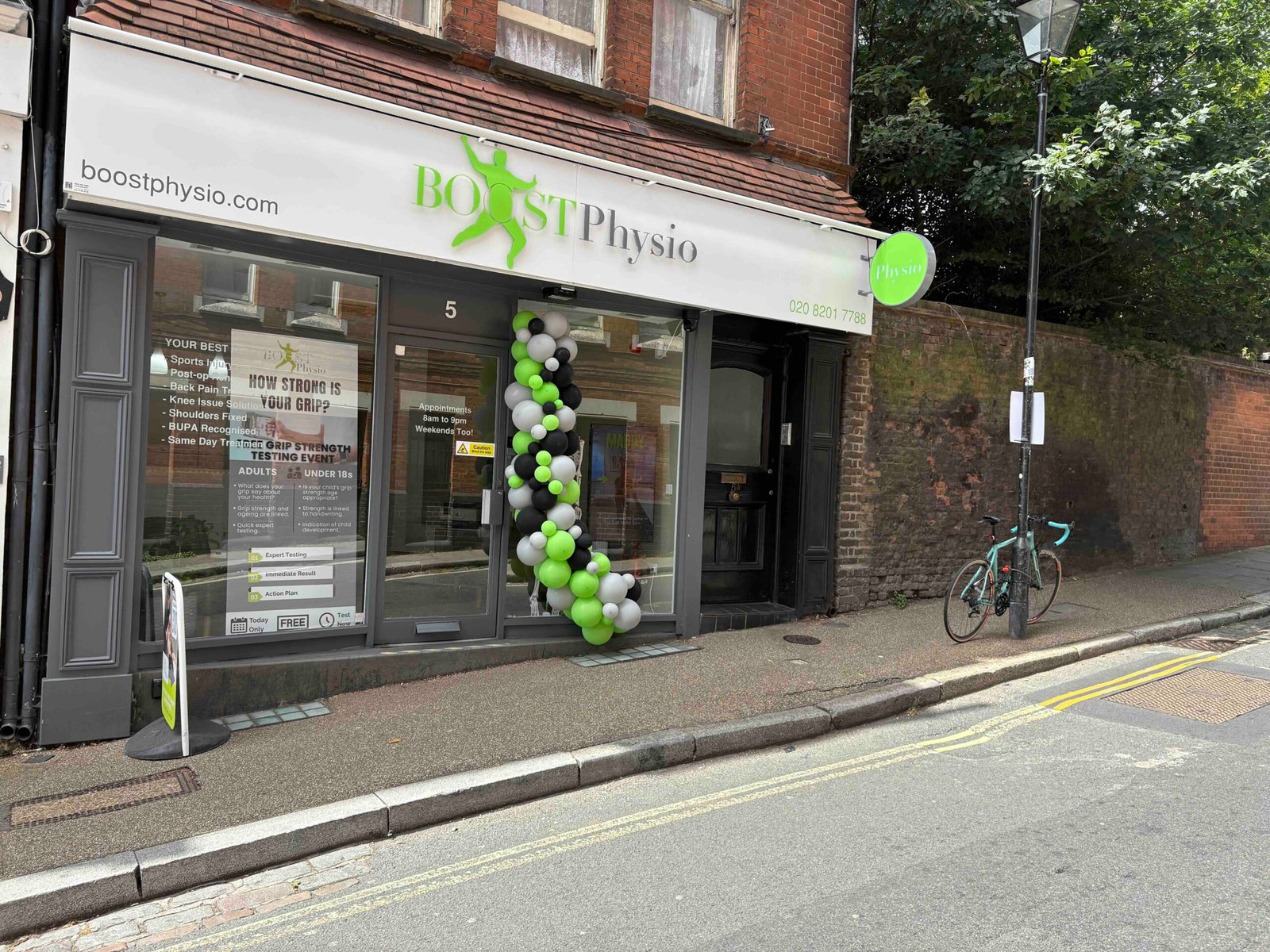

<?xml version="1.0" encoding="UTF-8"?>
<rss version="2.0"
	xmlns:content="http://purl.org/rss/1.0/modules/content/"
	xmlns:wfw="http://wellformedweb.org/CommentAPI/"
	xmlns:dc="http://purl.org/dc/elements/1.1/"
	xmlns:atom="http://www.w3.org/2005/Atom"
	xmlns:sy="http://purl.org/rss/1.0/modules/syndication/"
	xmlns:slash="http://purl.org/rss/1.0/modules/slash/"
	>

<channel>
	<title>Boost Physio &#187; BOOST PHYSIO; Physiotherapy Blogs; Steven Berkman</title>
	<atom:link href="http://www.boostphysio.com/blog/tag/boost-physio-physiotherapy-blogs-steven-berkman/feed/" rel="self" type="application/rss+xml" />
	<link>http://www.boostphysio.com/blog</link>
	<description>Just another WordPress weblog</description>
	<lastBuildDate>Thu, 02 Feb 2012 18:46:58 +0000</lastBuildDate>
	<generator>http://wordpress.org/?v=2.9.2</generator>
	<language>en</language>
	<sy:updatePeriod>hourly</sy:updatePeriod>
	<sy:updateFrequency>1</sy:updateFrequency>
			<item>
		<title>New Physio Jeelna joins BOOST</title>
		<link>http://www.boostphysio.com/blog/2012/02/02/new-physio-jeelna-joins-boost/</link>
		<comments>http://www.boostphysio.com/blog/2012/02/02/new-physio-jeelna-joins-boost/#comments</comments>
		<pubDate>Thu, 02 Feb 2012 18:45:26 +0000</pubDate>
		<dc:creator>admin</dc:creator>
				<category><![CDATA[Uncategorized]]></category>
		<category><![CDATA[BOOST PHYSIO; Physiotherapy Blogs; Steven Berkman]]></category>
		<category><![CDATA[Jeelna Ruparelia]]></category>
		<category><![CDATA[physiotherapy]]></category>
		<category><![CDATA[private physiotherapy NW London]]></category>

		<guid isPermaLink="false">http://www.boostphysio.com/blog/?p=345</guid>
		<description><![CDATA[BOOST offers a warm welcome to Senior Chartered Physiotherapist Jeelna Ruparelia who will be working full-time at
BOOST PHYSIO in Hendon.  Jeelna is an outstanding match for BOOST- she has the right mix of excellent sports experience, is a great &#8220;Hands-On&#8221; manual therapist, has qualifications in Pilates Rehab and has a warm bubbly personality! Perfect for us [...]]]></description>
			<content:encoded><![CDATA[<p>BOOST offers a warm welcome to Senior Chartered Physiotherapist Jeelna Ruparelia who will be working full-time at</p>
<div id="attachment_346" class="wp-caption alignright" style="width: 160px"><a href="http://www.boostphysio.com"><img class="size-thumbnail wp-image-346" title="jeelna profile photo" src="http://www.boostphysio.com/blog/wp-content/uploads/2012/02/jeelna-profile-photo-150x150.jpg" alt="" width="150" height="150" /></a><p class="wp-caption-text">Senior Chartered Physiotherapist Jeelna joins BOOST</p></div>
<p>BOOST PHYSIO in Hendon.  Jeelna is an outstanding match for BOOST- she has the right mix of excellent sports experience, is a great &#8220;Hands-On&#8221; manual therapist, has qualifications in Pilates Rehab and has a warm bubbly personality! Perfect for us at BOOST.</p>
<p>Jeelna also works part-time for Queens Park Rangers FC, where she helps to look after their youth players both pitch-side and in clinic.  I am sure she will be putting her football physio skills to great use with all our football injuries here at BOOST PHYSIO.</p>
<p>Jeelna&#8217;s hours are:</p>
<ul>
<li>Monday: 12-8pm</li>
<li>Tuesday: 8am-4pm</li>
<li>Wednesday: 1pm-9pm</li>
<li>Thursday: 12pm-8pm</li>
<li>Friday: 8am-3pm</li>
<li>Weekend appointments available</li>
</ul>
<p>Please call the clinic on 020 82017788 to arrange an appointment with Jeelna.</p>
]]></content:encoded>
			<wfw:commentRss>http://www.boostphysio.com/blog/2012/02/02/new-physio-jeelna-joins-boost/feed/</wfw:commentRss>
		<slash:comments>0</slash:comments>
		</item>
		<item>
		<title>Hypermobility in Children</title>
		<link>http://www.boostphysio.com/blog/2012/01/21/hypermobility-in-children/</link>
		<comments>http://www.boostphysio.com/blog/2012/01/21/hypermobility-in-children/#comments</comments>
		<pubDate>Sat, 21 Jan 2012 19:35:51 +0000</pubDate>
		<dc:creator>admin</dc:creator>
				<category><![CDATA[Uncategorized]]></category>
		<category><![CDATA[BOOST PHYSIO; Physiotherapy Blogs; Steven Berkman]]></category>
		<category><![CDATA[dr nathan hasson]]></category>
		<category><![CDATA[hypermobility in children]]></category>
		<category><![CDATA[paediatrician for hypermobility]]></category>
		<category><![CDATA[physiotherapy for hypermobility]]></category>
		<category><![CDATA[physiotherapy NW london for hypermobility]]></category>

		<guid isPermaLink="false">http://www.boostphysio.com/blog/?p=318</guid>
		<description><![CDATA[Have you been told that your child is hypermobile or double jointed?  Are you concerned that your child is hypermobile?  This is a very common situation and is seen and treated frequently and BOOST PHYSIO.  BOOST PHYSIO hosted excellent Paediatric Rheumatologist Dr Nathan Hasson, on Thursday 19 January 2012, to talk to our staff about [...]]]></description>
			<content:encoded><![CDATA[<p>Have you been told that your child is hypermobile or double jointed?  Are you concerned that your child is hypermobile?  This is a very common situation and is seen and treated frequently and BOOST PHYSIO.  BOOST PHYSIO hosted excellent Paediatric Rheumatologist Dr Nathan Hasson, on Thursday 19 January 2012, to talk to our staff about his approach to Hypermobility in kids. </p>
<div id="attachment_322" class="wp-caption alignright" style="width: 160px"><a href="http://www.drhasson.co.uk/" target="_blank"><img class="size-thumbnail wp-image-322 " title="Dr Nathan Hasson Paediatric Rheumatologist" src="http://www.boostphysio.com/blog/wp-content/uploads/2012/01/Dr-Nathan-Hasson-Paediatric-Rheumatologist-150x150.jpg" alt="Paediatrician Dr Nathan Hasson" width="150" height="150" /></a><p class="wp-caption-text">Dr Nathan Hasson- Paediatric Rheumatologist with an interest in Hypermobility</p></div>
<p> Dr Hasson is a Consultant Paediatrician at Great Ormond Street Hospital and consults privately in North West London at The Garden Hospital and 999 Finchley Road Medical Centre.  What impressed my staff was not only Dr Hasson&#8217;s broad and deep knowledge of the subject matter (something one expects from a consultant!), but his kind, caring and genuine interest came through very strongly.  Dr Hasson has a particular interest in dealing with children who are hypermobile, or who suffer from painful joints or muscles.  <a title="Dr Nathan Hasson, Consultant Paediatrician" href="http://www.drhasson.co.uk/" target="_blank">You can view Dr Hasson&#8217;s website here</a>. </p>
<p>I was refreshed by Dr Hasson&#8217;s attitude towards Hypermobility in children, it is such a common situation that he seems to view it almost as a variation in the normal spectrum of how flexible a child is, rather than a disease or illness.  In fact it would seem that the issue with hypermobility in children is not that they are hypermobile, but they are weak and have poorly developed muscles. Case in point gymnasts, ballerinas and circus performers are all hypermobile- but they are also strong and have well developed muscles. </p>
<p>It seems that over the last 10 years there has been an explosion of children with hypermobility. The actual prevelance of the condition cannot be that different to 20 years ago, this increase I believe is due to increased awareness about the condition and the fact that our children are more sedentary getting less exercise (due to TV watching, computer games etc) and have poorly developed muscle strength.  As a result the hypermobility causes these children who are also weak pain and leads them to seek medical advice. </p>
<p>In a way the diagnosis for children with hypermobility should probably be muscle weakness rather than </p>
<div id="attachment_326" class="wp-caption alignright" style="width: 160px"><a href="http://www.boostphysio.com/exercises.php?remove_header=y&amp;first=499627&amp;username=spiworaj&amp;password=eiklnswy" target="_blank"><img class="size-thumbnail wp-image-326 " title="Hypermobility exercises for knee" src="http://www.boostphysio.com/blog/wp-content/uploads/2012/01/Hypermobility-exercises-for-knee-150x150.jpg" alt="Example exercises for hypermobility strengthening exercises" width="150" height="150" /></a><p class="wp-caption-text">Exercises to strengthen the knees for hypermobile children</p></div>
<p>hypermobility. </p>
<p>Our physiotherapy treatment approach for Hypermobility in children at BOOST PHYSIO is a fun and dynamic strengthening exercise programme to build muscle strength, endurance and control among these children.  We find that once these children are stronger they have less pain and less trouble. </p>
<p>Physiotherapy treatment At BOOST PHYSIO, NW London, for children with hypermobility begins with a thorough assessment and examination.  We then formulate the necessary strengthening programme for the child to address particular areas of weakness.  </p>
<div><a title="Exercises for hypermobility of the knee" href="http://www.boostphysio.com/exercises.php?remove_header=y&amp;first=499627&amp;username=spiworaj&amp;password=eiklnswy" target="_blank">View an example of an exercise programme for a child with pain in their knees as a result of hypermobility.  </a></div>
<div>BOOST PHYSIO is based in Hendon, North West London, call us on 020 82017788 to arrange an appointment or look at our website <a href="http://www.boostpysio.com">www.boostpysio.com</a> for more information.  The clinic is open 8am-9pm and we also have Sunday appointments available.</div>
<div id="attachment_334" class="wp-caption alignright" style="width: 160px"><a href="http://www.boostphysio.com" target="_blank"><img class="size-thumbnail wp-image-334 " title="BOOST Hendon" src="http://www.boostphysio.com/blog/wp-content/uploads/2012/01/BOOST-Hendon-150x150.jpg" alt="BOOST PHYSIO Hendon" width="150" height="150" /></a><p class="wp-caption-text">BOOST PHYSIO Hendon NW London</p></div>
<p><a title="Exercises for hypermobility of the knee" href="http://www.boostphysio.com/exercises.php?remove_header=y&amp;first=499627&amp;username=spiworaj&amp;password=eiklnswy" target="_blank"></a></p>
]]></content:encoded>
			<wfw:commentRss>http://www.boostphysio.com/blog/2012/01/21/hypermobility-in-children/feed/</wfw:commentRss>
		<slash:comments>0</slash:comments>
		</item>
		<item>
		<title>OFF-PEAK HOUR BOOSTER!</title>
		<link>http://www.boostphysio.com/blog/2011/11/01/off-peak/</link>
		<comments>http://www.boostphysio.com/blog/2011/11/01/off-peak/#comments</comments>
		<pubDate>Tue, 01 Nov 2011 18:11:40 +0000</pubDate>
		<dc:creator>admin</dc:creator>
				<category><![CDATA[Uncategorized]]></category>
		<category><![CDATA[BOOST PHYSIO; Physiotherapy Blogs; Steven Berkman]]></category>
		<category><![CDATA[NW london physiotherapy]]></category>
		<category><![CDATA[Physiotherapy Hendon]]></category>

		<guid isPermaLink="false">http://www.boostphysio.com/blog/?p=280</guid>
		<description><![CDATA[As physiotherapists we often find that we get more out of treatments when we can spend longer with our patient. As a result we have introduced our OFF-PEAK HOUR BOOSTER- a discounted hour physiotherapy session for £75. 
]]></description>
			<content:encoded><![CDATA[<div id="attachment_283" class="wp-caption alignright" style="width: 310px"><a href="http://www.boostphysio.com"><img class="size-medium wp-image-283" title="Hendon NW London Physiotherapy BOOST PHYSIO" src="http://www.boostphysio.com/blog/wp-content/uploads/2011/11/Hendon-NW-London-Physiotherapy-BOOST-PHYSIO1-300x200.jpg" alt="" width="300" height="200" /></a><p class="wp-caption-text">Come for 1hour- leave feeling even better!</p></div>
<p>As physiotherapists we often find that we get more out of treatments when we can spend longer with our patient.  This enables us to work more comprehensively with our patients- spending more time &#8221;hands-on&#8221;, working more widely on the body, ensuring that the exercise regime is being well adhered to, answering questions more fully and ultimately leaving patients feeling even better following their appointment with us!</p>
<p>As a result we have introduced our <strong>OFF-PEAK HOUR BOOSTER</strong>- a discounted hour physiotherapy session for <strong>£75. </strong></p>
<p>1 hour appointments between 10am and 4pm are discounted to £75, when you pay immediately- a significant 22% discount. </p>
<p>Our <strong>PEAK HOUR BOOSTER</strong> is discounted to £85 for an hour, which is a great saving of 12%.</p>
<p>Half hour sessions remain at our rate of £48 for patients who pay immediately.</p>
<p>Call us to arrange a booking now at our Hendon clinic (NW London) on 020 8201 7788 or email <a href="mailto:info@boostphysio.com">info@boostphysio.com</a></p>
<div id="attachment_243" class="wp-caption alignright" style="width: 310px"><a href="http://www.boostphysio.com/rates.php"><img class="size-medium wp-image-243" title="Ultrasound physiotherapy treatment for sprained ankle BOOST PHYSIO Hendon NW London" src="http://www.boostphysio.com/blog/wp-content/uploads/2011/08/IMG_1361-300x200.jpg" alt="" width="300" height="200" /></a><p class="wp-caption-text">Ultrasound and electrotherapy for sprained ankle to speed up healing</p></div>
]]></content:encoded>
			<wfw:commentRss>http://www.boostphysio.com/blog/2011/11/01/off-peak/feed/</wfw:commentRss>
		<slash:comments>0</slash:comments>
		</item>
		<item>
		<title>Sports Massage for Runners</title>
		<link>http://www.boostphysio.com/blog/2011/01/12/sports-massage-for-runners/</link>
		<comments>http://www.boostphysio.com/blog/2011/01/12/sports-massage-for-runners/#comments</comments>
		<pubDate>Wed, 12 Jan 2011 14:17:29 +0000</pubDate>
		<dc:creator>admin</dc:creator>
				<category><![CDATA[sports injuries]]></category>
		<category><![CDATA[BOOST PHYSIO; Physiotherapy Blogs; Steven Berkman]]></category>
		<category><![CDATA[Hamstring strain physiotherapy]]></category>
		<category><![CDATA[massage for runners]]></category>
		<category><![CDATA[massage therapy]]></category>
		<category><![CDATA[physiotherapy]]></category>
		<category><![CDATA[running injuries]]></category>

		<guid isPermaLink="false">http://www.boostphysio.com/blog/?p=164</guid>
		<description><![CDATA[Helena Lundvik- Senior Massage Therapist at BOOST PHYSIO in Hendon, NW London, writes here about sports massage work that she does with runners of all levels- from fun runners to marathon runners.
I massage many athletes and runners at Boost Physio and I use a variety of techniques like Deep Tissue Massage and Soft Tissue Release [...]]]></description>
			<content:encoded><![CDATA[<p>Helena Lundvik- Senior Massage Therapist at BOOST PHYSIO in Hendon, NW London, writes here about sports massage work that she does with runners of all levels- from fun runners to marathon runners.</p>
<div id="attachment_165" class="wp-caption alignright" style="width: 250px"><a href="http://www.boostphysio.com/treatments.html"><img class="size-medium wp-image-165  " title="Helena- BOOST PHYSIO Massage Therapist, Hendon NW London" src="http://www.boostphysio.com/blog/wp-content/uploads/2011/01/Helena-Massage-300x199.jpg" alt="" width="240" height="159" /></a><p class="wp-caption-text">Helena- BOOST PHYSIO Massage Therapist</p></div>
<p>I massage many athletes and runners at Boost Physio and I use a variety of techniques like Deep Tissue Massage and Soft Tissue Release (STR). STR is a specialised stretch where specific areas within a larger muscle are targeted. It is used to effectively release tension in areas of muscles that normal massage or general stretches aren’t able to reach, to break up adhesions and increase the flexibililty in the muscle tissue. This can in turn increase the range of movement and improve the quality of movement in joints.</p>
<p>I have used a combination of Deep Tissue and Swedish massage and STR with runners and athelets with excellent results. The treatment helps to prepare the patient for peak performance, to drain away fatigue, to reduce muscle tension and prevent injuries.</p>
<p>Massage is especially important for runners who run more than 35 miles per week. The more miles you run, the more strain your muscles are under and the more beneficial massage is. If you incorporate massage into your training schedule it will help you to train optimally.</p>
<p>By having a massage treatment immediatly before or after an event will also help reduce the muscle spasms that occurs with vigorous exercise.</p>
<div class="mceTemp">
<dl id="attachment_166" class="wp-caption alignright" style="width: 169px;">
<dt class="wp-caption-dt"><a href="http://www.boostphysio.com/treatments.html"><img class="size-medium wp-image-166 " title="BOOST PHYSIO Sports Massage Therapy" src="http://www.boostphysio.com/blog/wp-content/uploads/2011/01/Helena-Profile-199x300.jpg" alt="" width="159" height="240" /></a></dt>
<dd class="wp-caption-dd">Helena our Massage Therapist at BOOST PHYSIO, Hendon, NW4</dd>
</dl>
<p>BOOST PHYSIO are running a Massage Special offer- have 2 one hour massage sessions with Helen between 13/1/11 and 28/2/11 for only £85 (normal price would be £100 for 2x 1hr massage). Simply call us on 020 8201 7788 to book the 2 massages and pay £85! </p>
</div>
]]></content:encoded>
			<wfw:commentRss>http://www.boostphysio.com/blog/2011/01/12/sports-massage-for-runners/feed/</wfw:commentRss>
		<slash:comments>0</slash:comments>
		</item>
		<item>
		<title>Hypermobility Syndrome- does it affect you?</title>
		<link>http://www.boostphysio.com/blog/2011/01/11/hypermobility-syndrome-does-it-affect-you/</link>
		<comments>http://www.boostphysio.com/blog/2011/01/11/hypermobility-syndrome-does-it-affect-you/#comments</comments>
		<pubDate>Tue, 11 Jan 2011 14:03:44 +0000</pubDate>
		<dc:creator>admin</dc:creator>
				<category><![CDATA[Uncategorized]]></category>
		<category><![CDATA[BOOST PHYSIO; Physiotherapy Blogs; Steven Berkman]]></category>
		<category><![CDATA[hypermobility syndrome]]></category>
		<category><![CDATA[joint pain]]></category>
		<category><![CDATA[physiotherapy for hypermobility]]></category>

		<guid isPermaLink="false">http://www.boostphysio.com/blog/?p=160</guid>
		<description><![CDATA[Hypermobility is when all or some of your joints move more than the usual normal range of motion. Usually this doesn’t cause any problems, but if you do have pain in your hypermobile joints- then you may suffer from Hypermobility Syndrome.

]]></description>
			<content:encoded><![CDATA[<p>Hypermobility is when all or some of your joints move more than the usual normal range of motion. Usually this doesn’t cause any problems, but if you do have pain in your hypermobile joints- then you may suffer from Hypermobility Syndrome.</p>
<p>Did you know that hypermobility diminishes with age, is 3 times more likely to affect women than men and has higher prevalence in Asian and African ethnicities compared to that of Caucasian ethnicity.</p>
<p>How do you know if you are hypermobile or have hypermobilty syndrome?</p>
<ul>
<li>Do your joints click a lot?</li>
<li>Do you constantly seem to injure yourself easily (like spraining your ankle or repetitive strain injuries)?</li>
<li>Do you find your body is more flexible than others (or used to be when you were a child)?</li>
<li>Can you place your hands flat on the floor without bending your knees or do the splits (or could you when you were younger)?</li>
<li>Do you consider yourself double jointed?</li>
<li>Is your skin stretchy/ take a long time to heal?</li>
<li>Do you have joint pain?</li>
<li>Are you resistant to anaesthetics (like when you go to the dentist)?</li>
</ul>
<p>If you answered yes to 3/5 of these and you are suffering with longstanding pain, come and discuss this with us. </p>
<div id="attachment_161" class="wp-caption alignright" style="width: 160px"><a href="http://www.boostphysio.com/who.html"><img class="size-full wp-image-161" title="Jolene Sher Physiotherapist Hendon" src="http://www.boostphysio.com/blog/wp-content/uploads/2011/01/Jolene-Sher-Physiotherapist-Hendon.jpg" alt="" width="150" height="150" /></a><p class="wp-caption-text">Jolene Sher- Snr Physiotherapist with an interest in Hypermobility Syndrome</p></div>
<p><a title="Jolene Sher" href="http://www.boostphysio.com/who.html" target="_blank">Senior BOOST Physiotherapist Jolene Sher</a> has an interest in dealing with cases of Hypermobility.</p>
<p>Being hypermobile is not a problem. Only if it affects your quality of life or brings you excessive pain that intervention may be necessary.</p>
<p> What do you do if you are hypermobile or have hypermobility syndrome?</p>
<p>The best treatment is through appropriate <span style="text-decoration: underline;">LIFESTYLE CHANGES </span> and strengthening exercises to improve the muscles that support your joints.</p>
<p>This can be best achieved with appropriate assessment and treatment with your physiotherapist.</p>
<p>Examples of what you and your physiotherapist can work on is:</p>
<ul>
<li>Posture and correct positioning (e.g. at work)</li>
<li>Incorporating gentle suitable exercise into your daily life</li>
<li>Core stability and balance training</li>
<li>Appropriate management of acute painful flare ups (with the doctor’s or physiotherapist’s help)</li>
<li>Referral to a doctor for medication (if necessary).</li>
<li><span style="text-decoration: underline;">Self help:</span> knowing your limitations (‘do’s and don’ts’). Learning to listen to your body.</li>
</ul>
<p> </p>
<p><strong><span style="text-decoration: underline;">REFERENCES:</span></strong></p>
<ol>
<li>Joint Hypermobilty. Hakim A, Grahame R; <span style="text-decoration: underline;">Best Practice and Research Clinical Rheumatology</span> Vol 17, No 6 pp 989-1004, 2003</li>
</ol>
<p> Hypermobility and the hypermobility syndrome. Simmonds JV, Keer RJ; <span style="text-decoration: underline;">Manual Therapy</span> 12 pp 298–309, 2007</p>
]]></content:encoded>
			<wfw:commentRss>http://www.boostphysio.com/blog/2011/01/11/hypermobility-syndrome-does-it-affect-you/feed/</wfw:commentRss>
		<slash:comments>0</slash:comments>
		</item>
		<item>
		<title>Consultant Q&amp;A with Mr Fares Haddad- leading knee and hip surgeon</title>
		<link>http://www.boostphysio.com/blog/2010/09/02/consultant-qa-with-mr-fares-haddad-leading-knee-and-hip-surgeon/</link>
		<comments>http://www.boostphysio.com/blog/2010/09/02/consultant-qa-with-mr-fares-haddad-leading-knee-and-hip-surgeon/#comments</comments>
		<pubDate>Thu, 02 Sep 2010 16:12:14 +0000</pubDate>
		<dc:creator>admin</dc:creator>
				<category><![CDATA[Ankle and Knee]]></category>
		<category><![CDATA[Arthritis]]></category>
		<category><![CDATA[Orthopaedic Surgery]]></category>
		<category><![CDATA[Uncategorized]]></category>
		<category><![CDATA[knee pain]]></category>
		<category><![CDATA[arthritis of the hip]]></category>
		<category><![CDATA[arthritis of the knee]]></category>
		<category><![CDATA[BOOST PHYSIO; Physiotherapy Blogs; Steven Berkman]]></category>
		<category><![CDATA[hip surgery]]></category>
		<category><![CDATA[knee surgery]]></category>
		<category><![CDATA[physiotherapy]]></category>

		<guid isPermaLink="false">http://www.boostphysio.com/blog/?p=142</guid>
		<description><![CDATA[Considering having hip or knee surgery?  Make sure you read my interview with top London knee and hip surgeon Mr Fares Haddad.  During Consultant Q&#038;A I ask Fares questions that are on my patients' minds about his field of hip and knee surgery. If you want to know about latest advances, "lubricating" injections for the knee and more, then please read on.]]></description>
			<content:encoded><![CDATA[<div class="mceTemp">
<div id="attachment_150" class="wp-caption alignright" style="width: 250px"><a href="http://www.fareshaddad.co.uk/index.html"><img class="size-medium wp-image-150" title="Fares Haddad " src="http://www.boostphysio.com/blog/wp-content/uploads/2010/09/fares-haddad-bio-photo-240x300.jpg" alt="" width="240" height="300" /></a><p class="wp-caption-text">Mr Fares Haddad- leading knee and hip surgeon</p></div>
<p>Considering having hip or knee surgery?  Make sure you read my interview with top London knee and hip surgeon Mr Fares Haddad.  During Consultant Q&amp;A I ask Fares questions that are on my patients&#8217; minds about his field of hip and knee surgery. If you want to know about latest advances, &#8220;lubricating&#8221; injections for the knee and more, then please read on.</p>
</div>
<p>At BOOST PHYSIO we&#8217;ve enjoyed rehabilitating many of Fares&#8217; patients over the years following hip and knee operations and I&#8217;ve also had the benefit of watching Fares perform various knee operations-hence we highly recommend him to our patients. If you want to read Fares&#8217; impressive biography and CV <a title="Fares Haddad CV Link" href="http://www.fareshaddad.co.uk/cv.html" target="_blank">follow this link to his website</a>, but in brief Fares Haddad is a Hip and Knee Reconstructive Surgeon at University College Hospitals, The Princess Grace Hospital and the Wellington Hospital.  He is Divisional Clinical Director of Surgical Specialties at UCH, and Director of the Institute of Sport, Exercise and Health at University College London.  Clearly an expert in his field!</p>
<p style="text-align: left;"><strong><em>Q: Fares, you are well known for being one of a few surgeons to perform key hole surgery for hip problems. Which patients do you find benefit the most from this procedure?<br />
A:  </em></strong>Hip arthroscopy is a procedure that has expanded dramatically over the last ten years. The indications have become much clearer. The most successful interventions are in cases where there are isolated labral tears or when patients present in the early phases of femorocetabular impingement (FAI) before the joint is irrevocably damaged. FAI is a condition where the bones of the hip joint develop in such a way that the patient can function relatively normally, and often very athletically, but where abnormal contact between the femur and pelvis damages the hip. These are typically in sporting individuals who either suffer an acute injury, the labral tear, or get the insidious onset of symptoms through activity such as running, cycling or football. Plain x-ray imaging and MRI scan gives us most of the information we need although CT scanning is occasionally necessary to look at the bony anatomy. By dealing with the primary bony impingement as well as the problems within joint we decrease symptoms and hopefully also prevent recurrence and further progression of the problem in future. </p>
<p style="text-align: left;"><strong><em>Q:  What does the future hold for technological developments in treatments for arthritic hip and knee joints?<br />
A:  </em></strong>The management of early arthritis of the hip and knee is progressing at an impressive rate. Technical developments will focus in the first instance on prevention thus by replacing the damaged menisci and the damaged joint surface and injured ligaments. The new work on partial resurfacing of joints with novel materials such as Oxinium is very exciting. New work also on customising joint replacement will change the face of the management of arthritis giving us joint replacements that are much more functional and geared to high end activity such as sports. <br />
 <br />
<strong><em>Q:  Which sports do you believe are suitable for patients following total hip replacement surgery?<br />
A:  </em></strong>Following a hip replacement operation, we encourage our patients to get back to normal day to day activity within 6 weeks. All non impact sports such as long distance walking, gym exercises, swimming, doubles tennis and golf are encouraged. It is perfectly feasible for patients to play singles tennis or indeed in certain circumstances squash and many of our patients do get back to running but it is important for the patients to realise that there is a tension between the amount of impact activity that they do and the wear that they will cause to their new joint. </p>
<p><strong><em>Q:  How effective do you find &#8220;lubricating&#8221; injections are for arthritic knees?</em></strong></p>
<p><strong><em>A:</em></strong>  Our experience of the Hyaluronic acid lubricating injections for knee and hip arthritis has been mixed. There are some patients who have an extremely good response that lasts up to six months. There are others who do not respond at all. It is very difficult to predict. My personal experience is that those patients have dry knees without effusions tend to respond better to Hyaluronic acid therapy whereas those with effusions can respond to aspiration and injection but do so for a shorter period of time.  These are nevertheless interesting therapies which we must continue to pursue both in our athletic population when we often use them after surgery and also in the arthritic population.</p>
<p>I hope that you have found this Consultant Q&amp;A interesting, if you wish to discuss any issues regarding your hip or knee condition with myself or one of my physios, please do not hesitate to contact us, you can call the clinic in Hendon, NW London on 020 82017788 or email us at <a href="mailto:info@boostphysio.com">info@boostphysio.com</a> </p>
<div id="attachment_42" class="wp-caption alignright" style="width: 209px"><a href="http://www.boostphysio.com"><img class="size-medium wp-image-42" title="Steven Berkman Physiotherapist London" src="http://www.boostphysio.com/blog/wp-content/uploads/2010/02/Steven-Berkman-Physiotherapist-London1-199x300.jpg" alt="" width="199" height="300" /></a><p class="wp-caption-text">The BOOST Blogger- Steven Berkman</p></div>
<p>Regards&#8230; The Boost Blogger, Steven Berkman</p>
]]></content:encoded>
			<wfw:commentRss>http://www.boostphysio.com/blog/2010/09/02/consultant-qa-with-mr-fares-haddad-leading-knee-and-hip-surgeon/feed/</wfw:commentRss>
		<slash:comments>0</slash:comments>
		</item>
		<item>
		<title>Top 10 Gym Sins?</title>
		<link>http://www.boostphysio.com/blog/2010/03/11/top-10-gym-sins/</link>
		<comments>http://www.boostphysio.com/blog/2010/03/11/top-10-gym-sins/#comments</comments>
		<pubDate>Thu, 11 Mar 2010 21:04:30 +0000</pubDate>
		<dc:creator>admin</dc:creator>
				<category><![CDATA[Shoulder]]></category>
		<category><![CDATA[Why do injuries happen?]]></category>
		<category><![CDATA[sports injuries]]></category>
		<category><![CDATA[back pain from gym]]></category>
		<category><![CDATA[BOOST PHYSIO]]></category>
		<category><![CDATA[BOOST PHYSIO; Physiotherapy Blogs; Steven Berkman]]></category>
		<category><![CDATA[gym injuries]]></category>
		<category><![CDATA[physiotherapy]]></category>
		<category><![CDATA[physiotherapy for sports injuries]]></category>
		<category><![CDATA[steven berkman]]></category>

		<guid isPermaLink="false">http://www.boostphysio.com/blog/?p=75</guid>
		<description><![CDATA[Steven Berkman, Private Physiotherapist, lists the top ten gym exercise no-no's and gym sins.]]></description>
			<content:encoded><![CDATA[<div id="attachment_77" class="wp-caption alignright" style="width: 160px"><a href="http://www.boostphysio.com"><img class="size-thumbnail wp-image-77" title="gym injuries" src="http://www.boostphysio.com/blog/wp-content/uploads/2010/03/gym-injuries-150x150.jpg" alt="Sports Injuries caused at gym" width="150" height="150" /></a><p class="wp-caption-text">Top 10 injuries in the gym</p></div>
<p>Last week I met with a group of good friends and fellow NW London Physiotherapists and Osteopaths for a delicious Chinese Meal, I mean CPD (Continued Professional Development) event.  Naturally no discussion would be complete without us outlining the top ten gym injuries and BAD exercises &#8230; so I thought I&#8217;d share it with you&#8230;</p>
<ol>
<li><strong><span style="color: #800000;">Dead lifts</span></strong>- why on earth anyone would want to lift a heavy weight with their knees locked and bending from the back is not only beyond me but idiotic!!</li>
<li><strong><span style="color: #800000;">Seated Cable Rows</span> </strong>( sitting on floor with feet in front of you)- another lumbar disc injury waiting to happen</li>
<li><strong><span style="color: #800000;">Lat Pull downs behind the head</span></strong>- cervical spine injury and disc irritation</li>
<li><strong><span style="color: #800000;">Lateral raises with dumbells</span></strong>- impingement syndrome and supraspinatus tendonitis HELLOOOO!!!</li>
<li><span style="color: #800000;"><strong>Weighted squats</strong></span>- where do we begin with this one ( Lumbar spine, cervico-thoracic junction pain, knee pain, patella femoral pain)</li>
<li><strong><span style="color: #800000;">Kettle Bells</span></strong>- the hip in vogue exercise form will do wonders for developing a lumbar disc protrusion or supraspinatus impingement</li>
<li><strong><span style="color: #800000;">Vibro-gym / Power Plate</span></strong>- great for aggravating all existing knee conditions, particularly mensicus trouble. Also good if you have a lumbar disc that has almost blown and you really want to speed up the process, do some deep squats while vibrating away at a high frequency</li>
<li> <strong><span style="color: #800000;">Step aerobics</span></strong>- that is if you can still find any gym silly enough to still be offering this sure fire way of developing anterior knee pain, patella femoral pain, patella tendonitis or achilles tendonitis</li>
<li><strong><span style="color: #800000;">Yoga head and neck stands</span></strong> (Yes I do really think that resting your whole body weight through your neck is  NOT a good idea)</li>
<li><span style="color: #800000;">
<div class="mceTemp"><strong>Back Extension machine &#8211; </strong><span style="color: #000000;">do 3 sets of 15reps heavy if  you want to have a lumbar spine facet joint problem and for about 4-6 sessions of physiotherapy</span></div>
<p> </p>
<p></span></li>
</ol>
<p>Clearly you can see that this is a somewhat glib listing, but please bear in mind that these warnings and concerns are based on actual injuries that I have treated and seen as a direct result of incorrect gym exercises.  If you do have any questions or have an injury related to any of these issues we can certainly help you recover quicker and more fully and prevent any further problems in future.</p>
<p>Call us on 020 8201 7788 or look at our main website <a href="http://www.boostphysio.com">www.boostphysio.com</a></p>
<p>My private physiotherapy clinic is in Hendon, North West London.  And of course we are BUPA and AXA PPP recognised.</p>
<p>Careful gym training- Steven Berkman (The BOOST BLOGGER)</p>
]]></content:encoded>
			<wfw:commentRss>http://www.boostphysio.com/blog/2010/03/11/top-10-gym-sins/feed/</wfw:commentRss>
		<slash:comments>1</slash:comments>
		</item>
		<item>
		<title>Judo is a dangerous sport- or is it just the pursuit of excellence that&#8217;s dangerous?!</title>
		<link>http://www.boostphysio.com/blog/2010/02/11/judo-is-a-dangerous-sport-or-is-it-just-the-pursuit-of-excellence-thats-dangerous/</link>
		<comments>http://www.boostphysio.com/blog/2010/02/11/judo-is-a-dangerous-sport-or-is-it-just-the-pursuit-of-excellence-thats-dangerous/#comments</comments>
		<pubDate>Thu, 11 Feb 2010 10:28:08 +0000</pubDate>
		<dc:creator>admin</dc:creator>
				<category><![CDATA[Judo Injuries]]></category>
		<category><![CDATA[Why do injuries happen?]]></category>
		<category><![CDATA[elite sports injuries]]></category>
		<category><![CDATA[BOOST PHYSIO; Physiotherapy Blogs; Steven Berkman]]></category>
		<category><![CDATA[physiotherapy]]></category>
		<category><![CDATA[physiotherapy for elite sports]]></category>
		<category><![CDATA[private physiotherapy NW London]]></category>
		<category><![CDATA[Rafael Nadal injury]]></category>
		<category><![CDATA[winter injuries]]></category>

		<guid isPermaLink="false">http://www.boostphysio.com/blog/?p=53</guid>
		<description><![CDATA[My experience of injury screening 2 Great Britain Judo players.]]></description>
			<content:encoded><![CDATA[<div id="attachment_54" class="wp-caption alignright" style="width: 310px"><a href="http://www.boostphysio.com/blog/wp-content/uploads/2010/02/judo-injuries-physiotherapy.jpg"><img class="size-medium wp-image-54" title="judo injuries physiotherapy" src="http://www.boostphysio.com/blog/wp-content/uploads/2010/02/judo-injuries-physiotherapy-300x284.jpg" alt="Physiotherapy north west london for judo injuries" width="300" height="284" /></a><p class="wp-caption-text">What allows 1 sports person to escape injury free- and the other to be beset by injury troubles?</p></div>
<p>A couple of weeks ago I conducted an injury screening for 2 members of the Great Britain Judo team.  I concluded that Judo is a dangerous sport!  This was the week before they were representing GB in a Judo tournament- who knows they may be representing GB at the 2012 Olympics!  How did we come into contact with these Judo players?  Well&#8230;</p>
<p>At BOOST PHYSIO we are privileged to be a Talented Athlete Scholarship Scheme  physio clinic (<a title="TASS link" href="http://www.tass.gov.uk/" target="_blank">TASS- click here for more info about TASS</a>).  What&#8217;s TASS I hear you ask- it is a Government funded programme to support and fast-track young sporting talent, the potential medal winners of the future- and BOOST PHYSIO is one of the clinics looking after these athletes.  <a title="Video about TASS " href="http://www.tass.gov.uk/video.asp?id=35" target="_blank">Click here to view a Video about TASS</a>.</p>
<h3>So during this athlete screening I had to screen 2 female judo players which left me with the philosophical question- why do elite athletes have so many injuries and what leads some to succeed and others not?</h3>
<p>One of the girls had broken her arm and her wrist  previously and had a thumb injury, the other had a dislocated thumb &#8211; all from Judo.  But these girls were tough- training hard in conjunction with their strength and conditioning coaches.  I wondered to myself- are these injuries simply the consequence of contact sport, or is it something else, perhaps the extreme lengths to which elite sports people push themselves to achieve excellence?  Could an ability to recover better from injury allow one to  to succeed while another fails?</p>
<p>I&#8217;ve never seen a 19year old athlete who&#8217;s had a steroid injection for an injury before (usually it&#8217;s over 30&#8217;s and sometimes those in their 20&#8217;s), so when I did this hit home and reminded me the extremes to which sports people push their bodies in pursuit of their dreams.</p>
<p>Rafael Nadal&#8217;s poor performance at the Australian Open seems to be put down almost entirely to injury from pushing himself too much, some critics even wonder if he&#8217;s going to be able to come back in the same way because of his injury problems.  I&#8217;ve had to treat injuries of various county level tennis players ranging from 10 to 17 years old.  The one who I think gets pushed the hardest is the 10 year old boy- whether it is him or his mum who does the pushing I am sometimes not too sure- but when kids under 14 come regularly for physio for various injuries one asks the question- is this simply the cost of the pursuit of excellence or is this abnormal.  Furthermore could it be that what dictates whether he will ever make it to Wimbeldon is actually his physical make-up and pre-disposition to injury that may make him miss 1 or 2 critical seasons of training and competition?</p>
<p><a title="Link to Telegraph Story over injury and safety concerns" href="http://www.telegraph.co.uk/sport/othersports/winter-olympics/7198427/Winter-Olympics-2010-Safety-fears-as-casualty-list-grows-ahead-of-extreme-games.html" target="_blank">A recent article in the Telegraph </a>talks about the mounting concern over the Winter Olympics casualty list and safety of the various sports- it would seem that the sports and events themselves are becoming more extreme, not only the athletes themselves who are pusing the boundaries all the time.  Clearly there is a huge psychological element to why and how athletes push themselves to the extremes.</p>
<p>Enough philosophising- to sum up it is clear to me that to even aspire to elite sporting success requires enormous physical sacrifice and dedication, along with mental tennacity and extreme focus.  But that to succeed in achieving the pinnacle of one&#8217;s sport will almost always be dictated by the ability to ward off  serious injury. I firmly believe that those athletes on the winners podium have their genetic code to thank in warding off career stopping injury in what Darwin would call survival of the fittest!</p>
<p>So the reason why I have always achieved sporting mediocrity must be down to my genetic code- it just aint good enough <img src='http://www.boostphysio.com/blog/wp-includes/images/smilies/icon_smile.gif' alt=':-)' class='wp-smiley' /> </p>
]]></content:encoded>
			<wfw:commentRss>http://www.boostphysio.com/blog/2010/02/11/judo-is-a-dangerous-sport-or-is-it-just-the-pursuit-of-excellence-thats-dangerous/feed/</wfw:commentRss>
		<slash:comments>1</slash:comments>
		</item>
		<item>
		<title>Shoulder Injury? Could it be the rotator cuff?</title>
		<link>http://www.boostphysio.com/blog/2010/02/05/shoulder-injury-could-it-be-the-rotator-cuff/</link>
		<comments>http://www.boostphysio.com/blog/2010/02/05/shoulder-injury-could-it-be-the-rotator-cuff/#comments</comments>
		<pubDate>Fri, 05 Feb 2010 14:24:51 +0000</pubDate>
		<dc:creator>admin</dc:creator>
				<category><![CDATA[Uncategorized]]></category>
		<category><![CDATA[BOOST PHYSIO; Physiotherapy Blogs; Steven Berkman]]></category>
		<category><![CDATA[physiotherapy for rotator cuff injuries]]></category>
		<category><![CDATA[private physiotherapy NW London]]></category>
		<category><![CDATA[rotator cuff injury]]></category>
		<category><![CDATA[shoulder injuries]]></category>

		<guid isPermaLink="false">http://www.boostphysio.com/blog/?p=22</guid>
		<description><![CDATA[
written by Jolene Sher, Senior Physio
 
What is the Rotator Cuff?

The shoulder joint is a ball and socket joint, formed by the ball-shaped end of the upper arm (the humerus) and a shallow socket on the edge of the shoulder blade (scapula). This allows for a large range of movement in many directions. Stability within the [...]]]></description>
			<content:encoded><![CDATA[<h2>
<div id="attachment_38" class="wp-caption alignright" style="width: 281px"><a href="http://www.boostphysio.com/conditions.html"><img class="size-medium wp-image-38 " title="rotator cuff tear physiotherapy" src="http://www.boostphysio.com/blog/wp-content/uploads/2010/02/rotator-cuff-tear-271x300.jpg" alt="Physiotherapy for rotator cuff injury NW London" width="271" height="300" /></a><p class="wp-caption-text">This is an image of the front of the right shoulder showing examples of some tears to the rotator cuff of the shoulder</p></div>
<p>written by Jolene Sher, Senior Physio</h2>
<p> </p>
<p>What is the Rotator Cuff?</p>
<ul>
<li>The shoulder joint is a ball and socket joint, formed by the ball-shaped end of the upper arm (the humerus) and a shallow socket on the edge of the shoulder blade (scapula). This allows for a large range of movement in many directions. Stability within the joint is provided by the muscles, with some support from the ligaments. The main muscles that give this stability are the Rotator Cuff muscles.</li>
</ul>
<p> </p>
<ul>
<li> The rotator cuff is made up of a group of four muscles (called the subscapularis, supraspinatus, infraspinatus and teres minor) and their tendons. The tendons wrap around the shoulder, forming a cuff around the ball of the humerus providing the stability during movement of the arm.</li>
</ul>
<p> </p>
<ul>
<li>On top of the shoulder joint is a bone called the acromion. In the gap between the shoulder joint and the acromion is a space that some of the rotator cuff tendons run through.</li>
</ul>
<h2>Types of rotator cuff injury</h2>
<p>Rotator cuff injury is a general term to describe inflammation or damage to one or more of the muscles or tendons that make up the rotator cuff.</p>
<h4>Rotator cuff tendonitis</h4>
<ul>
<li>The tendons of your rotator cuff can become inflamed. It most often affects the tendons which run underneath the acromion. When a tendon becomes trapped or squeezed, it&#8217;s known as impingement syndrome. Pain usually comes on gradually.</li>
<li>This is when the muscles or tendons that make up your rotator cuff become completely or partially torn. It may be a result of a trauma, such as a fall, or due to tiny tears to the tendon through use and wear over time. Pain usually comes on suddenly.</li>
</ul>
<h4>Rotator cuff tear</h4>
<p><strong> How does it start and who is affected</strong></p>
<p>Rotator cuff injuries may occur due to one or more of the following:</p>
<ul>
<li>Poor movements (e.g. repetitive or overhead activities) or poor posture around the shoulder are usually factors that can cause adverse strains and stresses in the rotator cuff.</li>
</ul>
<ul>
<li>Lifting or pulling an object that is too heavy for you or lifting it in the wrong way.</li>
<li>Landing on an outstretched hand to break a fall. Rotator cuff injuries often occur if you dislocate your shoulder.</li>
<li>Wear with age.</li>
<li>Muscle imbalance (When some of the muscles in your rotator cuff are stronger than others).</li>
<li>Musculoskeletal disease (e.g. rheumatoid arthritis)</li>
</ul>
<p> </p>
<p>Shoulder pain affects around one in five people in the UK and rotator cuff injury is the most common cause.</p>
<h2>Symptoms</h2>
<p>Symptoms of a rotator cuff injury may include:</p>
<ul>
<li>Pain and tenderness over your shoulder (it may radiate down the arm) especially when you raise your arm out to the side, reach behind you or lift or pull a heavy weight</li>
<li>Pain at night, particularly when you sleep on the affected side</li>
<li>A feeling of weakness in your shoulder</li>
<li>A limited range of movement in your shoulder</li>
<li>Clinical findings from the Doctor or Physiotherapist. This includes special tests to pick up signs of shoulder impingment.</li>
<li>Medical treatment: Commonly used interventions are advice (e.g. rest and ice), medication (e.g. anti-inflammatories or analgesics), corticosteroid injections and/or referral for physical therapy.</li>
</ul>
<h2>Diagnosis</h2>
<ul>
<li>MRI</li>
<li>Ultrasound scan</li>
<li>X-rays cannot diagnose rotator cuff injuries. </li>
</ul>
<h2>Treatment</h2>
<h3>Conservative Treatment (Non-surgical treatments)</h3>
<h3>Physiotherapy Treatment</h3>
<ul>
<li>Appropriate initial assessment- NB history and observation.</li>
<li>Initial treatment is to help alleviate pain and inflammation. This can be achieved with ice, rest, soft tissue release and the use of electrotherapy modalities.</li>
<li>Identifying predisposing factors such as posture or ergonomics (work/sport positions) and pre-injury level of function.</li>
<li>Appropriate referral to a specialist if need be.</li>
<li>Rehabilitation to return to work/sport:</li>
</ul>
<p>ü      Stabilisation – to ensure that the shoulder joint can remain stable under increased tension.</p>
<p>ü      Strength – to make the shoulder strong in all movements (using gym based exercises)</p>
<p>ü      Function – enhancing the shoulder’s ability to cope with the demands needed to get back to pre injury level</p>
<h3>Surgical treatments</h3>
<p>If unable to treat it conservatively surgery may be indicated, for example to repair a tear in your rotator cuff or to remove calcium deposits.</p>
<h2>Prevention</h2>
<p>To prevent rotator cuff injuries, make sure you:</p>
<ul>
<li>have the correct technique when playing sports or doing activities that use your shoulder, particularly overhead motions</li>
<li>do exercises and stretches to keep your rotator cuff muscles strong and supple</li>
</ul>
]]></content:encoded>
			<wfw:commentRss>http://www.boostphysio.com/blog/2010/02/05/shoulder-injury-could-it-be-the-rotator-cuff/feed/</wfw:commentRss>
		<slash:comments>1</slash:comments>
		</item>
		<item>
		<title>BOOST PHYSIO starts Blogging</title>
		<link>http://www.boostphysio.com/blog/2010/02/04/boost-physio-starts-blogging/</link>
		<comments>http://www.boostphysio.com/blog/2010/02/04/boost-physio-starts-blogging/#comments</comments>
		<pubDate>Thu, 04 Feb 2010 15:02:44 +0000</pubDate>
		<dc:creator>admin</dc:creator>
				<category><![CDATA[Uncategorized]]></category>
		<category><![CDATA[BOOST PHYSIO; Physiotherapy Blogs; Steven Berkman]]></category>

		<guid isPermaLink="false">http://www.boostphysio.com/blog/2010/02/04/boost-physio-starts-blogging/</guid>
		<description><![CDATA[I&#8217;ve been wanting to start a Blog about BOOST PHYSIO for over a year! Somewhere to express thoughts, ideas, comments, discussion about some interesting patients and events going on here at BOOST PHYSIO. Finally I&#8217;ve gotten around to it- and many thanks to Clinton Gomer from Energy House Digitial who are amazing and do all [...]]]></description>
			<content:encoded><![CDATA[<div id="attachment_42" class="wp-caption alignright" style="width: 209px"><a href="http://www.boostphysio.com/blog/wp-content/uploads/2010/02/Steven-Berkman-Physiotherapist-London1.jpg"><img class="size-medium wp-image-42" title="Steven Berkman Physiotherapist London" src="http://www.boostphysio.com/blog/wp-content/uploads/2010/02/Steven-Berkman-Physiotherapist-London1-199x300.jpg" alt="" width="199" height="300" /></a><p class="wp-caption-text">The BOOST Blogger- Steven Berkman</p></div>
<p>I&#8217;ve been wanting to start a Blog about BOOST PHYSIO for over a year! Somewhere to express thoughts, ideas, comments, discussion about some interesting patients and events going on here at BOOST PHYSIO. Finally I&#8217;ve gotten around to it- and many thanks to Clinton Gomer from Energy House Digitial who are amazing and do all our web related things for making it happen!</p>
<p>I guess the biggest problem now is going to be how to keep me quiet!! I guess you could just ignore me!</p>
<p>Enjoy- Steven Berkman</p>
]]></content:encoded>
			<wfw:commentRss>http://www.boostphysio.com/blog/2010/02/04/boost-physio-starts-blogging/feed/</wfw:commentRss>
		<slash:comments>0</slash:comments>
		</item>
	</channel>
</rss>