
Tag Archive for 'BOOST PHYSIO'

Skiing Troubles?

Skiing injury

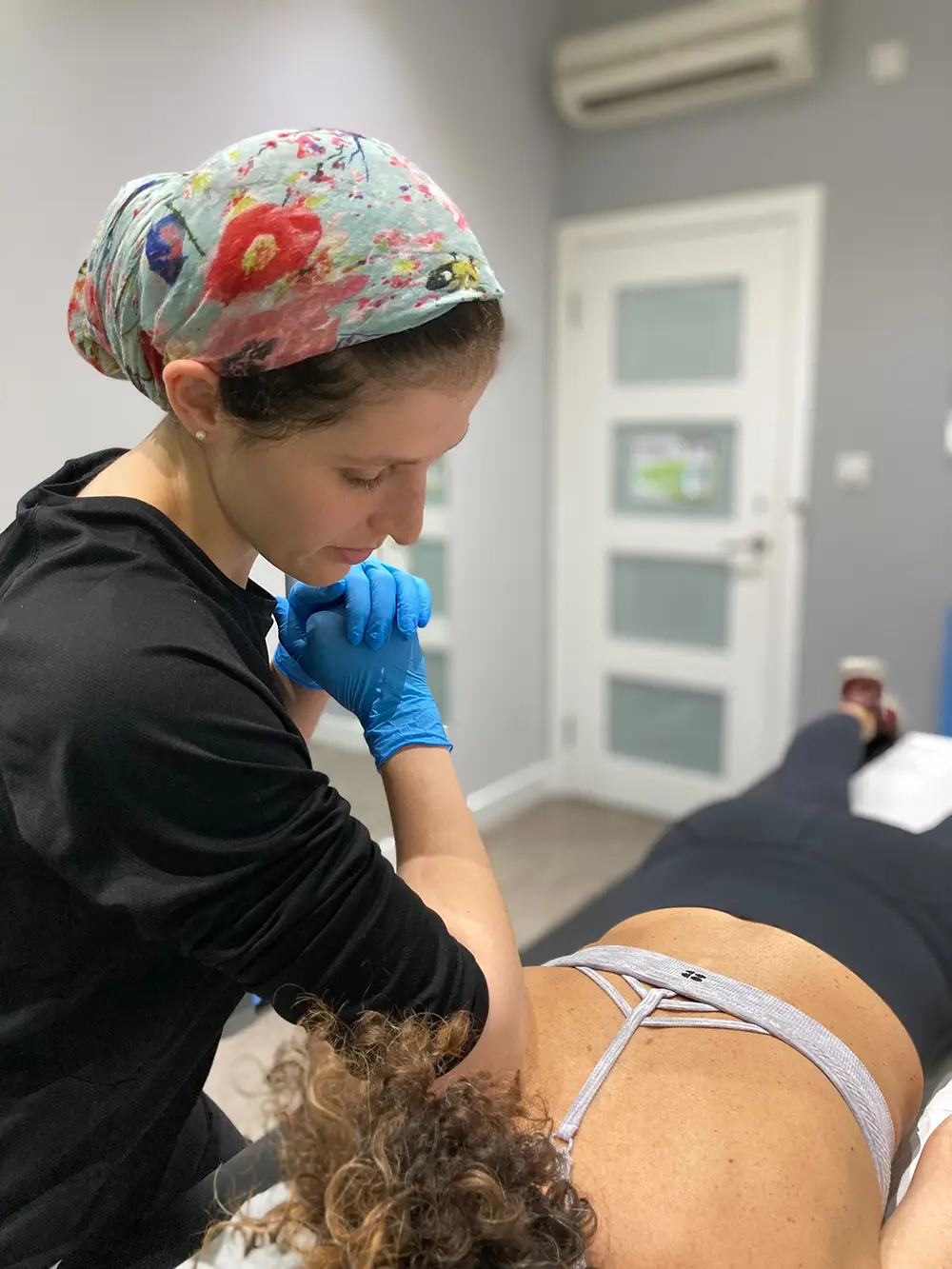
Laura Harman- Senior BOOST PHYSIO dealing with skiing issues

Have you ever wondered why your knees hurt when you ski? Why your thighs burn at the end of the day? Or why you find it easier to turn to the right?

If the answer is yes…then maybe Pilates for skiers can help!

Regardless of your level of skiing, if the body isn’t conditioned correctly it can be very demanding, putting excess stress on your joints, muscles, ligaments and tendons, leading to pain and injury.

You may well have heard of Pilates before with regards to back strength and stability. Pilates for skiers is a particular type of Pilates that targets the specific muscles that you use when you ski.

Pilates for skiers is designed to assess the body and prepare it for the demands that skiing places on it. It will focus on:

-         Posture awareness and education (skiing and non-skiing posture)

-         Assessment of muscle imbalance

-         Core stability

-         Balance and coordination

-         Ski specific muscle strength/endurance and flexibility

The programme aims to prevent injury and increase strength and endurance. By doing so, it will improve skiing efficiency, ultimately making your skiing holiday more enjoyable!

The benefits of Pilates for skiers can be enjoyed by anyone, regardless of your age or skiing level. Whether you simply want to get fit for an approaching ski holiday or address a specific skiing issue – Pilates for Skiers can help!

Book a Pilates for Skiers session with Laura today and begin your skiing training now! Your body will thank you if you do!

Call BOOST PHYSIO in Hendon, NW London, on 020 82017788 for an appointment.

Freestyle Footballer, Ethan Altman, following his injury treatment

Freestyle footballer, Ethan Altman, sent us this thank you video, after having treatment at BOOST PHYSIO he was able to return to this exciting sport of Freestyle Football.  Have a look at him in action- he is amazing!!

This is what Ethan had to say: ” I’m Ethan Altmann, I had about 5 sessions with Jolene to help me through an injury. I am now fully healed!

I was given a lot of stretches and strengthening exercised to do and taught how to do them, I was told to rest for at least two weeks. I did the exercises and I rested, and I am really really happy I made a full recovery so quickly to return to my training!”

Jolene Sher, Senior Physiotherapist @ BOOST PHYSIO

This is a link to Ethan’s Youtube channel www.youtube.com/EraOfFreestyle

This is a link to Ethan’s “crew” homepage:  www.thefootballfreestylers.com

Top 10 Gym Sins?

Sports Injuries caused at gym

Top 10 injuries in the gym

Last week I met with a group of good friends and fellow NW London Physiotherapists and Osteopaths for a delicious Chinese Meal, I mean CPD (Continued Professional Development) event.  Naturally no discussion would be complete without us outlining the top ten gym injuries and BAD exercises … so I thought I’d share it with you…

  1. Dead lifts- why on earth anyone would want to lift a heavy weight with their knees locked and bending from the back is not only beyond me but idiotic!!
  2. Seated Cable Rows ( sitting on floor with feet in front of you)- another lumbar disc injury waiting to happen
  3. Lat Pull downs behind the head- cervical spine injury and disc irritation
  4. Lateral raises with dumbells- impingement syndrome and supraspinatus tendonitis HELLOOOO!!!
  5. Weighted squats- where do we begin with this one ( Lumbar spine, cervico-thoracic junction pain, knee pain, patella femoral pain)
  6. Kettle Bells- the hip in vogue exercise form will do wonders for developing a lumbar disc protrusion or supraspinatus impingement
  7. Vibro-gym / Power Plate- great for aggravating all existing knee conditions, particularly mensicus trouble. Also good if you have a lumbar disc that has almost blown and you really want to speed up the process, do some deep squats while vibrating away at a high frequency
  8.  Step aerobics- that is if you can still find any gym silly enough to still be offering this sure fire way of developing anterior knee pain, patella femoral pain, patella tendonitis or achilles tendonitis
  9. Yoga head and neck stands (Yes I do really think that resting your whole body weight through your neck is  NOT a good idea)
  10. Back Extension machine – do 3 sets of 15reps heavy if  you want to have a lumbar spine facet joint problem and for about 4-6 sessions of physiotherapy


Clearly you can see that this is a somewhat glib listing, but please bear in mind that these warnings and concerns are based on actual injuries that I have treated and seen as a direct result of incorrect gym exercises.  If you do have any questions or have an injury related to any of these issues we can certainly help you recover quicker and more fully and prevent any further problems in future.

Call us on 020 8201 7788 or look at our main website www.boostphysio.com

My private physiotherapy clinic is in Hendon, North West London.  And of course we are BUPA and AXA PPP recognised.

Careful gym training- Steven Berkman (The BOOST BLOGGER)

Weekend Warriors Watch Out!

Physiotherapy clinic specialising in sports injuries Hendon NW London

Don't be a Weekend Warrior- make sure your fitness level matches your activity level

The key to injury prevention is always in the preparation! The ‘Weekend
Warrior’ patients that we see, are all guilty of doing too little training
during the week and not being adequately fit for playing their sport.

Don’t forget that training should be specific
to your sports, so if you are playing football,
cycling may be helpful but running and
shuttle sprints would be better. The most
common football injuries that are treated at
BOOST PHYSIO are hamstring, calf and groin
muscle injuries.
Most of our patients who have injured
themselves in sport do not warm-up. Spend 10
minutes warming up. Don’t confuse warmingup
with stretching, these are two different
things. Warming up involves aerobic exercise
to raise the heart rate and body temperature
gradually and should include activities specific
to the sport being performed. For sports like
football and netball starting with jogging and
progressing to a faster run for short shuttles
is important. During the last 2 minutes of
the warm up then do specific stretches to
the high risk areas such as the quadriceps,
hamstrings, groin and calf muscles – this
ensures there is sufficient elasticity in
the muscles.
While the research on stretching is
controversial as to whether it actually
reduces the chances of an injury, you will
not find an elite athlete who does not spend
time stretching.